Workplace Stress Levels High in Albania Despite Strong Engagement
Gallup report shows mixed trends in employee well-being and productivity
A recent international assessment indicates that Albania faces elevated levels of workplace stress (stresi në vendin e punës), with 39% of employees reporting that they experience stress during their job activities. This data comes from the “State of the Global Workplace 2026” report, which positions the country among European states with comparatively high levels of employee pressure (presioni ndaj punonjësve) in professional environments.
Despite this, the same report highlights a relatively strong level of employee engagement (angazhimi i punonjësve) in Albania. Approximately 32% of workers are considered actively engaged in their roles, a figure that exceeds the European average. This suggests that while stress remains a widespread issue, a significant portion of the workforce maintains a high degree of involvement in daily work performance (performanca e përditshme në punë), contributing positively to productivity.
The findings also identify specific groups more affected by stress. Younger employees under the age of 35, individuals in managerial roles, and those working under hybrid work models (modele hibride të punës) report higher levels of strain. These categories reflect structural changes in the labor market, where increased responsibility, flexibility, and uncertainty can intensify occupational stress factors (faktorët e stresit profesional).
The report emphasizes that improving both stress management and engagement is essential for maintaining productivity and workforce stability. Addressing mental well-being in the workplace (mirëqenia mendore në vendin e punës) is presented as a key condition for sustaining long-term economic performance. Without targeted interventions, elevated stress levels may undermine efficiency and increase risks related to burnout and reduced output.
At the same time, the coexistence of high stress and above-average engagement indicates a complex labor dynamic. Employees may remain committed to their roles despite experiencing pressure, pointing to underlying motivations linked to job security, career progression, or limited alternatives. This combination highlights the importance of balancing productivity demands (kërkesat e produktivitetit) with sustainable working conditions.
Overall, the data reflects a dual trend in Albania’s labor environment, where strong participation in work is accompanied by notable psychological strain. The report suggests that policies focused on reducing stress while preserving engagement could improve both workforce efficiency (efikasiteti i fuqisë punëtore) and overall employee satisfaction.
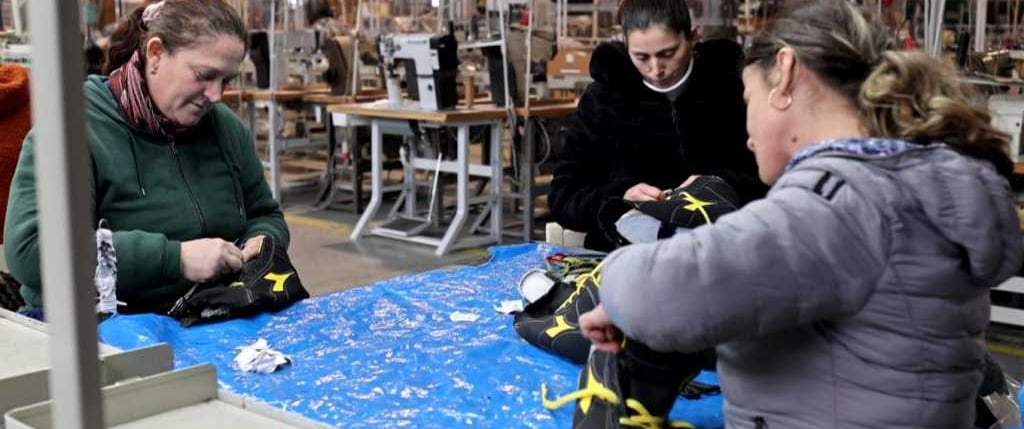
Workers assemble and inspect footwear on a factory floor.
Send us your suggestions to: pr@albanian-institute.com
Come visit Albania!
© Copyright 2026 Albanian Institute
Learn the official language of Albania and Kosovo in 30 days thanks to our complete Grammar, Vocabulary and Culture courses. Start speaking Albanian today!