Warning Over North Macedonia’s Future Amid Language and Power-Sharing Disputes
Albanian political leader highlights risks tied to implementation of the 2001 agreement and institutional balance
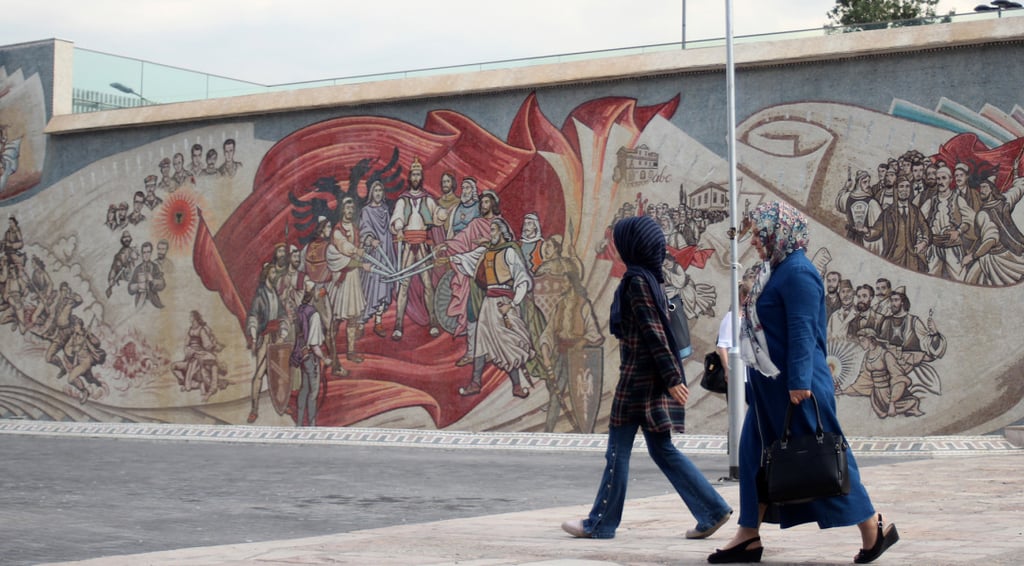
A political warning regarding the future of North Macedonia was issued during a public address in Tirana, where the leader of the Albanian Democratic Party for Integration (BDI), Ali Ahmeti, raised concerns about institutional balance and interethnic relations. Speaking at a major diaspora gathering, he stated that the country’s trajectory depends on maintaining coexistence (bashkëjetesë) and power-sharing governance (bashkëqeverisje) between Macedonians and Albanians.
The remarks were delivered during the Diaspora Summit organized by the Albanian government, an event that brought attention to regional political developments. Ahmeti addressed the audience by emphasizing that failure to ensure equal participation in governance structures could have serious consequences. He explicitly warned that without these principles, the country’s future would be “numbered,” linking stability directly to institutional cooperation (bashkëpunim institucional) and balanced representation.
The context of his statement relates to rising tensions in North Macedonia, particularly surrounding the implementation of language rights. Recent issues concerning the use of the Albanian language (përdorimi i gjuhës shqipe) have intensified debates within the EU candidate country. Language policy remains a central issue in the country’s political framework, influencing both governance and social cohesion.
During his speech, Ahmeti recalled the significance of the 2001 Ohrid Agreement, which marked a turning point in North Macedonia’s political structure. He highlighted that the agreement established Albanian as an official language, reinforcing the legal foundation for language equality (barazi gjuhësore) and minority rights. This framework continues to serve as a reference point in discussions about constitutional and institutional obligations.
The Ohrid Agreement, reached after a period of armed conflict, introduced key reforms aimed at improving ethnic relations and ensuring broader inclusion in state institutions. It addressed issues such as decentralization, equitable representation, and official language status. These provisions are closely tied to the concept of interethnic stability (stabilitet ndëretnik) and remain essential to the country’s political system.
Ahmeti’s intervention also reflects broader concerns about governance practices and adherence to existing agreements. The call for maintaining co-governance mechanisms (mekanizma bashkëqeverisjeje) underscores the importance of political arrangements that allow different communities to participate in decision-making processes. Without such mechanisms, tensions may escalate, affecting both domestic stability and international relations.
North Macedonia’s status as a candidate for European Union membership adds further significance to these developments. Compliance with democratic standards, including minority rights and institutional inclusiveness, is a key requirement for accession. Issues related to EU integration process (proces integrimi në BE) are therefore directly connected to how internal political challenges are managed.
The speech in Tirana illustrates how regional political actors continue to engage with developments in neighboring countries, particularly where shared ethnic and cultural ties exist. By addressing these issues in an international forum, Ahmeti reinforced the importance of dialogue and adherence to established agreements as a basis for long-term stability.
The situation remains closely linked to the implementation of legal frameworks and the balance of political power within North Macedonia. As debates over language use and governance continue, the emphasis on coexistence and cooperation is likely to remain central to the country’s political discourse.
Key Albanian Vocabulary
bashkëjetesë coexistence
bashkëqeverisje power-sharing governance
bashkëpunim institucional institutional cooperation
përdorimi i gjuhës shqipe use of the Albanian language
barazi gjuhësore language equality
stabilitet ndëretnik interethnic stability
mekanizma bashkëqeverisjeje co-governance mechanisms
proces integrimi në BE EU integration process
Albanians' integration in North Macedonia remains complex 20 years after Ohrid Accords.
Send us your suggestions to: pr@albanian-institute.com
Come visit Albania!
© Copyright 2026 Albanian Institute
Learn the official language of Albania and Kosovo in 30 days thanks to our complete Grammar, Vocabulary and Culture courses. Start speaking Albanian today!