Montenegro and Albania Face Pressure to Strengthen Case for EU Membership by 2030
Strategic report highlights political risks, economic arguments, and reform challenges in accession process
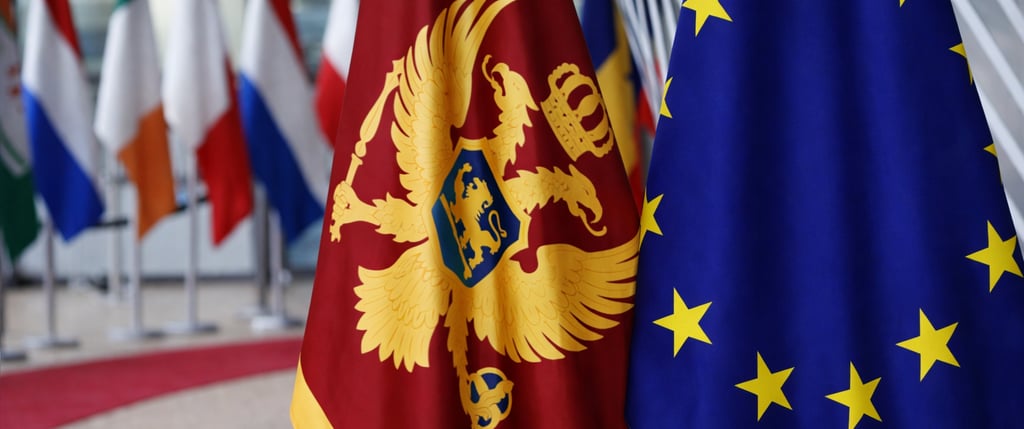
As the European Union continues its enlargement agenda, EU accession negotiations (negociatat e anëtarësimit në BE) involving Montenegro and Albania are progressing, but experts warn that both countries must intensify efforts to secure approval from all member states. A policy paper published by Carnegie Europe on April 14 emphasises that despite ongoing progress, the process remains vulnerable to internal political resistance (rezistencë politike e brendshme) within the EU, particularly as the 2030 accession target approaches.
According to the report titled “How to Join the EU in Three Easy Steps,” authored by Dimitar Bechev and Iliriana Gjoni, the enlargement process is advancing at a steady institutional pace (ritëm institucional i qëndrueshëm), even if it has received limited public attention. Montenegro is already engaged in advanced negotiations, while Albania may soon reach the final phase of talks with the European Commission. However, the authors stress that early optimism may be challenged by rising opposition linked to populist political movements (lëvizje politike populiste) in major EU countries.
The requirement for unanimous approval from all EU member states introduces significant uncertainty. Domestic political dynamics, particularly in countries like France, could complicate ratification through mechanisms such as referendums or parliamentary supermajorities. The report notes that reliance on geopolitical justification strategies (strategji justifikimi gjeopolitik) is no longer sufficient to guarantee support. As the authors stated, “Geopolitical arguments… won’t do the trick,” highlighting the need for a more comprehensive approach.
Instead, Montenegro and Albania are encouraged to demonstrate their value through economic contribution potential (potencial kontributi ekonomik) and strategic relevance. The report underlines that both countries must position themselves as beneficial participants, stating that they need to present themselves “as a net asset for the union, not a burden.” This shift reflects a broader emphasis on measurable impact within the EU framework.
Security cooperation is identified as a key strength. Both countries are active members of NATO and contribute to collective defence operations (operacione mbrojtjeje kolektive) across Europe. Their involvement includes participation in battlegroups in Eastern Europe, engagement in joint military exercises, and support for Ukraine. Additionally, they contribute to peacekeeping missions in Kosovo and Bosnia, reinforcing their role in regional security stabilisation (stabilizim i sigurisë rajonale).
Although their military capabilities remain relatively limited, the report suggests that increased deployment capacity could enhance their strategic importance. Expanding their role would allow EU countries to redirect resources toward more critical areas such as the Eastern flank. This highlights the importance of defence burden-sharing mechanisms (mekanizma të ndarjes së barrës së mbrojtjes) within the broader European security architecture.
Geography also plays a crucial role in their strategic positioning. The Western Balkans region offers important transport routes connecting the Adriatic and Black Sea, which are essential for military mobility infrastructure (infrastrukturë për lëvizshmëri ushtarake) and logistics. These corridors could facilitate the movement of troops and equipment, contributing to operational readiness across Europe.
In addition to security, energy policy represents another significant advantage. Albania already produces nearly all its electricity through renewable sources, while Montenegro relies heavily on hydropower, complemented by wind and solar energy. This positions both countries within the EU’s green energy transition framework (kuadër i tranzicionit të energjisë së gjelbër), enhancing their relevance in sustainability policies. Reliable and affordable electricity also supports key industries, particularly tourism and manufacturing, which depend on energy cost stability (stabilitet i kostos së energjisë).
The report also identifies opportunities in digital development, particularly in infrastructure required for artificial intelligence. Lower labour and land costs make the region attractive for data centre investment projects (projekte investimi në qendra të dhënash). Combined with regulatory alignment with EU standards, this could allow the Western Balkans to complement existing European technological hubs.
Despite these advantages, persistent structural challenges remain. Issues such as weak governance, corruption, and labour shortages caused by emigration continue to affect competitiveness. The authors highlight the need for institutional reform processes (procese reformash institucionale) and deeper integration into the EU single market. Improved regional cooperation is also necessary to overcome the limitations of fragmented economic markets (tregje ekonomike të fragmentuara), which hinder investment and growth.
The report further notes that Montenegro and Albania could advance alongside other candidates such as Iceland, whose accession path is considered less politically sensitive. However, they also risk being delayed by more complex cases, including Ukraine and Moldova, where geopolitical considerations are more pronounced. This creates a dynamic where enlargement policy interdependence (ndërvarësi e politikave të zgjerimit) may influence timelines.
Ultimately, the authors emphasise that passive participation is not sufficient. As stated in the report, “That is why they cannot remain passive applicants.” To meet the 2030 target, both countries must actively demonstrate how their accession would enhance European competitiveness and cohesion (konkurrueshmëri dhe kohezion evropian), while also strengthening security frameworks.
With EU enlargement once again becoming a central issue in European policy debates, the coming years will be decisive. The success of Montenegro and Albania will depend not only on domestic reforms but also on their ability to gain political support across member states, particularly in an environment shaped by increasing caution toward expansion and evolving strategic priorities.
Key Albanian Vocabulary
negociatat e anëtarësimit në BE EU accession negotiations
rezistencë politike e brendshme internal political resistance
ritëm institucional i qëndrueshëm steady institutional pace
lëvizje politike populiste populist political movements
strategji justifikimi gjeopolitik geopolitical justification strategies
potencial kontributi ekonomik economic contribution potential
operacione mbrojtjeje kolektive collective defence operations
stabilizim i sigurisë rajonale regional security stabilisation
mekanizma të ndarjes së barrës së mbrojtjes defence burden-sharing mechanisms
infrastrukturë për lëvizshmëri ushtarake military mobility infrastructure
kuadër i tranzicionit të energjisë së gjelbër green energy transition framework
stabilitet i kostos së energjisë energy cost stability
projekte investimi në qendra të dhënash data centre investment projects
procese reformash institucionale institutional reform processes
tregje ekonomike të fragmentuara fragmented economic markets
ndërvarësi e politikave të zgjerimit enlargement policy interdependence
konkurrueshmëri dhe kohezion evropian European competitiveness and cohesion
Montenegro and Albania-next EU members, says Enlargement Commission.
Send us your suggestions to: pr@albanian-institute.com
Come visit Albania!
© Copyright 2026 Albanian Institute
Learn the official language of Albania and Kosovo in 30 days thanks to our complete Grammar, Vocabulary and Culture courses. Start speaking Albanian today!