
Kosovo Government Approves Troop Deployment to Gaza Stabilisation Force
Participation depends on parliamentary vote amid broader geopolitical context
Kosovo’s government has approved sending members of the Kosovo Security Forces (FSK) to Gaza as part of a proposed International Stabilisation Force, an armed mission intended to provide security, demilitarise Hamas fighters, and safeguard the delivery of aid and reconstruction materials. The plan forms part of a broader initiative (iniciativë) linked to a peace proposal associated with former US President Donald Trump.
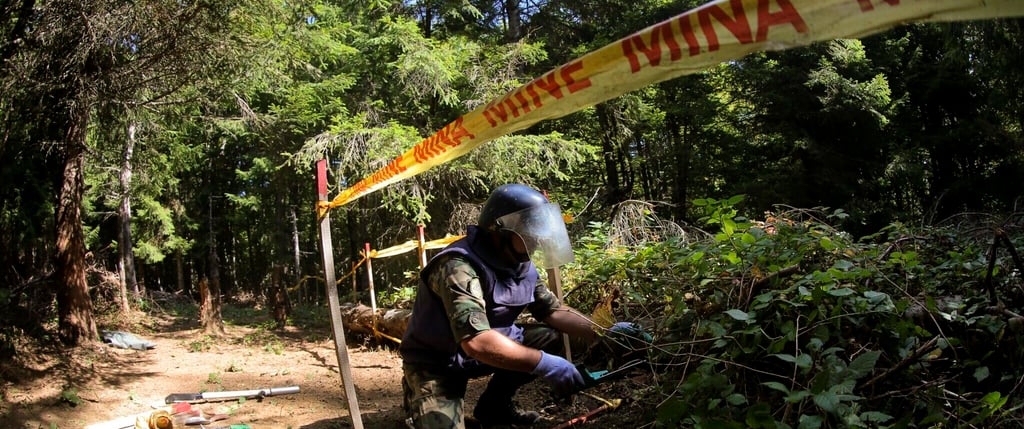
Kosovo first committed to the concept when it joined the Board of Peace, the body tasked with overseeing the implementation of the plan. Prime Minister Albin Kurti stated during a government meeting that Kosovo had expressed its willingness to participate and noted that the FSK is recognized for search-and-rescue operations and demining, highlighting its operational capabilities (kapacitete).
Kurti explained that the decision to send troops is based on an invitation from the United States Central Command issued in December, as well as on United Nations Security Council Resolution 2803 and the political will expressed within the Board of Peace. He emphasized that all operations would be conducted in accordance with international law, including the UN Charter, humanitarian law, and the rules of engagement governing the mission, ensuring strict adherence (respektim) to legal frameworks.
The UN resolution adopted on September 29, 2025, calls for the establishment of a temporary International Stabilisation Force in Gaza under a unified command acceptable to the Board of Peace, in coordination with Egypt and Israel. It also outlines that, as the force establishes control and stability, Israeli forces would withdraw from the Gaza Strip, marking a phased transition (tranzicion) in security arrangements.
Kurti recalled that Kosovo itself benefited from international peacekeeping forces after the 1999 war, referring to the NATO-led KFOR mission. He noted that Kosovo has been a recipient of such international support, providing historical context (kontekst) for its participation.
In January 2025, Kosovo also allocated 500,000 euros in humanitarian aid to Gaza, complementing its potential military contribution with financial assistance (ndihmë).
So far, Kosovo, Albania, Indonesia, Morocco, and Kazakhstan have agreed to contribute personnel to the Stabilisation Force, while Egypt and Jordan have committed to training Gaza’s police forces. This reflects a coordinated multinational effort (përpjekje) to support the mission.
The government’s approval represents only the first step, as the deployment still requires the backing of two-thirds of Kosovo’s parliament. It remains unclear when the vote will take place, as parliament is currently focused on electing a new president before a constitutional deadline to avoid extraordinary elections, underscoring immediate political priorities (prioritete).
Kosovo and Israel established diplomatic relations in 2020 under an agreement brokered during Trump’s first term. The agreement resulted in Israel recognizing Kosovo and Kosovo opening an embassy in Jerusalem, while Kosovo does not maintain diplomatic relations with Palestine, reflecting the broader diplomatic framework (kornizë) surrounding the issue.
A Kosovo Security Forces member searches for mines from the 1998-1999 war.
Send us your suggestions to: pr@albanian-institute.com

Come visit Albania!
© Copyright 2026 Albanian Institute
Learn the official language of Albania and Kosovo in 30 days thanks to our complete Grammar, Vocabulary and Culture courses. Start speaking Albanian today!