Industrial Growth and Wage Trends Highlighted in Durrës
Government points to rising salaries and proposes pension reform incentives
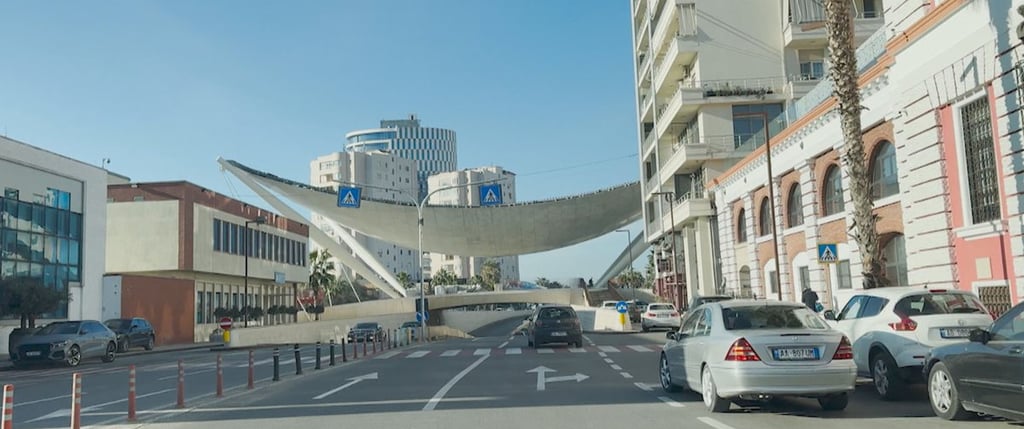
During a visit to an industrial complex in Durrës, Prime Minister Edi Rama addressed developments in Albania’s production sector, emphasizing the expansion of factories and enterprises (fabrika dhe ndërmarrje) and the impact of investment in industrial technology (teknologji industriale). The site hosts multiple companies engaged in transport, recycling, and processing activities, illustrating the diversification of the country’s industrial base.
Rama stated that the number of businesses operating in these sectors continues to increase, presenting this as evidence of structural growth in the economy. He highlighted that wages in these industries now exceed €1,000 on average, describing this level as a meaningful salary benchmark (nivel domethënës i pagës) within the national context. According to his remarks, this upward trend is expected to continue alongside company performance and productivity targets, reflecting broader improvements in sectoral income levels (nivelet e të ardhurave sektoriale).
“Albanian enterprises must be promoted. We are here to make it possible for Albanians to see a working Albania—one that doesn’t make the news and isn’t visible anywhere, because news coverage is occupied with trivial matters such as gossip or the repetition of daily falsehoods.
The number of factories and enterprises in Albania is steadily increasing. The average salary here is over €1,000, which is a meaningful wage for today’s Albania, and I am confident it will continue to grow in line with the company’s objectives,” Rama said.
The Prime Minister also linked industrial expansion to broader economic visibility, suggesting that ongoing developments in production and employment are often overlooked. He framed this progress as part of a functioning domestic economy (ekonomi funksionale vendase) that operates beyond media narratives, stressing the importance of supporting local businesses and sustaining enterprise development (zhvillimi i ndërmarrjeve) across multiple sectors.
In addition to discussing wages and industrial growth, Rama introduced plans for a new pension mechanism designed to complement the existing system. The proposal centers on voluntary contributions, allowing employees to allocate a portion of their income into a personal fund. This initiative represents a shift toward a supplementary pension scheme (skemë pensioni shtesë) aimed at strengthening long-term financial security.
“We are preparing a new pension scheme that will not replace, but rather enhance the existing one, by giving all employees who wish to save more for retirement the opportunity to allocate any percentage of their salary into a dedicated fund, which the state will match.
So, if someone decides to set aside one euro from their salary each month into their personal pension fund—on top of the pension they will receive from the standard scheme—the state will contribute another euro, making it two euros. Naturally, this will be a combined system,” he said.
The proposed model introduces a matched contribution mechanism (mekanizëm kontributi të barabartë), where the state doubles individual savings directed toward retirement funds. This approach is intended to encourage participation and increase personal savings rates, while maintaining the foundation of the current public system. By combining state support with voluntary input, the plan aims to create a more flexible and resilient retirement savings structure (strukturë kursimi për pension).
Overall, the statements in Durrës connected industrial expansion, wage growth, and pension reform into a broader narrative of economic development. The focus on higher salaries and additional savings mechanisms reflects an attempt to address both immediate income conditions and long-term financial planning, reinforcing the role of economic policy coordination (koordinimi i politikave ekonomike) in shaping Albania’s labor and social security landscape.
Downtown Durrës amid new developments.
Send us your suggestions to: pr@albanian-institute.com
Come visit Albania!
© Copyright 2026 Albanian Institute
Learn the official language of Albania and Kosovo in 30 days thanks to our complete Grammar, Vocabulary and Culture courses. Start speaking Albanian today!