Commemoration of the Battle of Koshare Highlights Historical Turning Point
Kosovo leadership recalls military operation that challenged border divisions
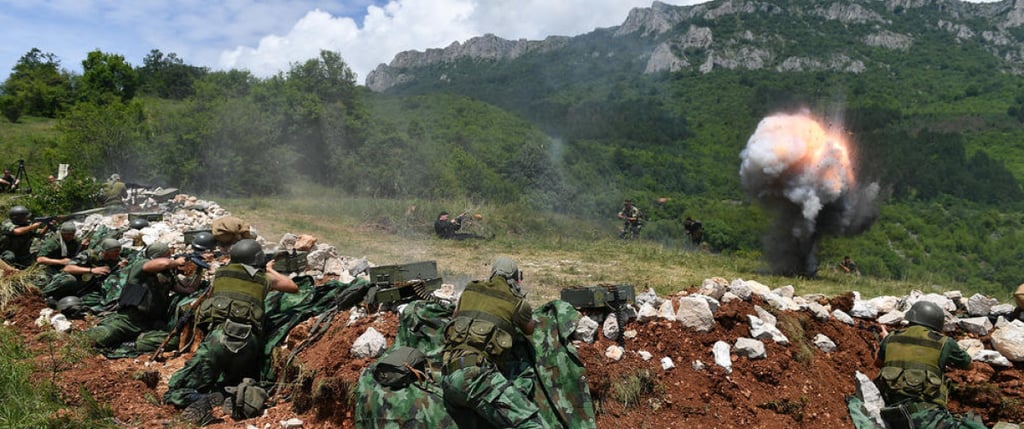
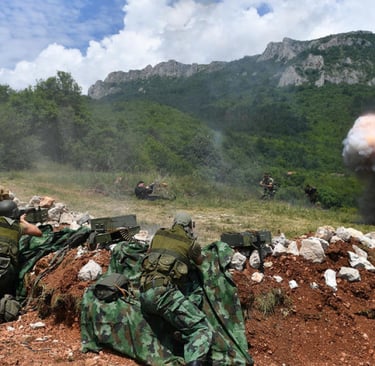
Kosovo Prime Minister Albin Kurti marked the anniversary of the Battle of Koshare by emphasizing its role in dismantling what he described as a forced border division (ndarje e detyruar kufitare) between Kosovo and Albania. Speaking on the 27th anniversary, he framed the battle as a decisive moment in efforts to overcome long-standing separation and achieve territorial connection (lidhje territoriale) between Albanian-populated areas.
According to Kurti, the military engagement began on April 9, 1999, when fighters of the Kosovo Liberation Army launched coordinated attacks against Serbian military positions along the border zone between Albania and the former Yugoslavia. The offensive targeted strategic locations including the “July 7” base, the Koshara Slope, and the Gllava peak, marking the start of a prolonged border zone offensive (ofensivë në zonën kufitare) aimed at weakening defensive lines.
"On April 9, 1999, early in the morning, soldiers of the Kosovo Liberation Army attacked Serbian military positions in the border zone between the Republic of Albania and Yugoslavia, attacking the "July 7" base, the Koshara Slope and the Gllava peak.
"From that day until June 10, for two full months in a row, thousands of KLA members would be involved in the fighting of the Battle of Koshare, in a territory stretching several kilometers and in a rugged mountainous and hilly terrain," Kurti said.
The battle unfolded over a period of approximately two months, continuing until June 10, 1999, and involved thousands of combatants operating in difficult terrain. Kurti noted that the timing of the offensive came shortly after the beginning of NATO’s military intervention against Yugoslavia, situating the battle within a broader context of international military coordination (koordinim ushtarak ndërkombëtar) and regional conflict escalation.
He further stated that the Kosovo Liberation Army functioned as a volunteer-based military force (forcë ushtarake vullnetare) that became aligned with NATO during the campaign. According to his account, this alignment contributed to halting operations described as ethnic cleansing and genocide carried out by Serbian and Yugoslav forces against Kosovo Albanians, linking the battle to wider conflict intervention efforts (ndërhyrje në konflikt) at the international level.
"In fierce fighting during the Battle of Koshara, 114 KLA fighters fell martyrs fighting for the liberation of Kosovo, while over 400 others were injured. On the opposing side, the Serbian side would never publish the full data of the shameful losses from this battle, but over 100 members of the Yugoslav army were killed and many times their number were injured. Every spring, we remember with gratitude and honor all the KLA fighters who courageously participated in the Battle of Koshara, giving sweat, toil and blood for our homeland and the freedom of the people. Glory to the martyrs who fell in the Battle of Koshara, today and forever!" Kurti wrote on Facebook.
Casualty figures cited in the statement indicate that 114 members of the Kosovo Liberation Army were killed and more than 400 injured during the fighting, reflecting the intensity of the armed confrontation (përballje e armatosur). On the opposing side, Kurti stated that over 100 Yugoslav soldiers were killed, although full official data was not publicly disclosed, highlighting uncertainties surrounding reported military losses (humbje ushtarake të raportuara).
The commemoration underscores the enduring significance of the battle in Kosovo’s historical narrative. It is presented as a symbol of resistance and sacrifice, reinforcing its place in collective memory as a moment that challenged geopolitical divisions and contributed to broader efforts toward national liberation and historical remembrance (kujtesë historike).
On this day 26 years ago, the Battle of Kosare began.
Send us your suggestions to: pr@albanian-institute.com
Come visit Albania!
© Copyright 2026 Albanian Institute
Learn the official language of Albania and Kosovo in 30 days thanks to our complete Grammar, Vocabulary and Culture courses. Start speaking Albanian today!