Break in Eurojust Cooperation Weakens Regional Fight Against Organised Crime
Absence of liaison prosecutors slows cross-border investigations in the Balkans
Across the Western Balkans, criminal networks increasingly operate beyond national boundaries, particularly in drug trafficking networks (rrjete të trafikut të drogës) and migrant smuggling operations (operacione të kontrabandës së migrantëve). These activities rely on cross-border coordination, making international judicial cooperation essential for effective enforcement. Mechanisms that connect national prosecutors with European institutions have therefore become central to tackling transnational crime.
A key component of this system is the role of liaison prosecutors at Eurojust, who act as direct links between domestic authorities and European-level coordination platforms. Their function enables rapid exchange of evidence and supports judicial coordination mechanisms (mekanizma të koordinimit gjyqësor) that significantly accelerate complex investigations. In cases involving multiple jurisdictions, such cooperation can reduce delays from years to months.
Between 2017 and 2021, several Western Balkan countries strengthened their cooperation by appointing liaison prosecutors to Eurojust. Data indicates that some countries made extensive operational use of this system, demonstrating its value in dismantling cross-border criminal groups (grupe kriminale ndërkufitare). For example, coordinated actions supported by Eurojust contributed to arrests linked to large-scale drug shipments and the seizure of counterfeit currency, reflecting tangible outcomes in combating illicit markets.
However, this framework has recently weakened in both Serbia and North Macedonia, where liaison prosecutor positions are no longer filled. The absence of these roles represents more than a staffing issue; it disrupts international legal cooperation (bashkëpunimi juridik ndërkombëtar) and slows down responses to organised crime. Without continuous representation, communication gaps emerge, reducing efficiency in evidence sharing and operational planning.
In Serbia, institutional challenges have prevented the timely appointment of a replacement. The High Prosecutorial Council, responsible for such decisions, has been unable to secure the required majority, highlighting concerns about political influence on judicial bodies (ndikim politik mbi organet gjyqësore). This deadlock has left a critical position vacant, affecting ongoing and future cooperation with European partners.
In North Macedonia, the situation reflects a different but related dynamic. The liaison prosecutor resigned following removal from sensitive investigations involving alleged political financing, citing sustained pressure. This development raises questions about prosecutorial independence (pavarësia e prokurorisë) and the resilience of institutional safeguards against external interference.
The practical consequences of these disruptions are significant. Eurojust provides not only coordination but also logistical and financial support for joint investigations, including funding for travel, translation, forensic analysis, and operational costs. Without a liaison prosecutor, countries lose access to these operational support mechanisms (mekanizma mbështetjeje operacionale), weakening their ability to participate effectively in multinational investigations.
The absence also affects joint investigation teams, where real-time collaboration is essential. Without a direct representative, coordination becomes slower and less reliable, increasing the risk that criminal groups exploit delays in cross-border enforcement actions (veprime të zbatimit ndërkufitar). This creates additional space for illicit activities to expand across jurisdictions.
Efforts to restore these positions face structural and procedural challenges. In Serbia, the appointment process requires consensus across politically divided institutions, making progress uncertain. In North Macedonia, although the procedure is formally simpler, delays may still arise due to disagreements between prosecutorial and executive authorities. Even once appointed, new representatives require time to rebuild institutional trust and coordination networks (besim institucional dhe rrjete koordinimi), meaning recovery will not be immediate.
As a temporary measure, both countries may rely on designated contact points to maintain communication with Eurojust. However, this approach cannot fully replace the efficiency and access provided by liaison prosecutors. Contact points offer limited functionality and do not ensure the same level of continuity or responsiveness in complex criminal investigations (hetime komplekse kriminale).
Overall, the current gap in representation weakens a critical layer of cooperation in the regional justice system. The disruption highlights how institutional fragility and political factors can directly impact the effectiveness of international mechanisms designed to combat organised crime, particularly in a region where transnational networks remain highly active.
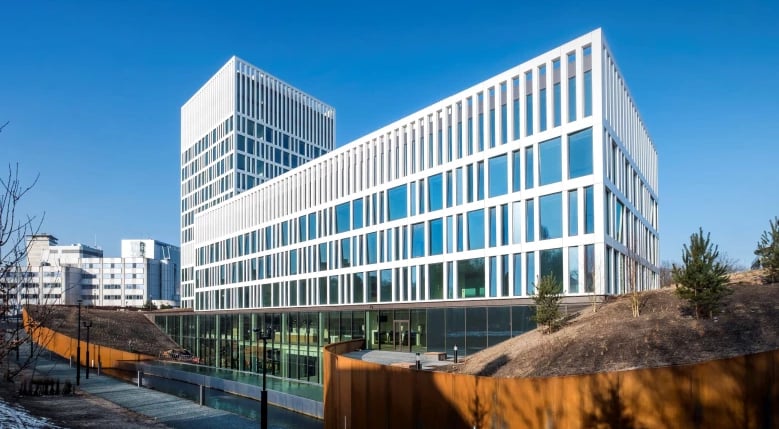
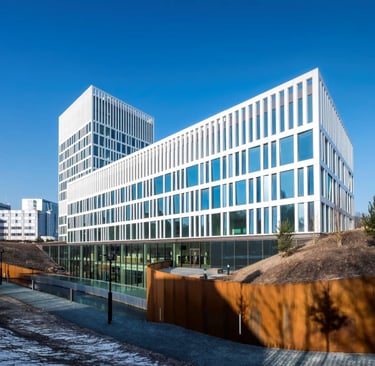
The Eurojust building, located on Johan de Wittlaan in The Hague, Netherlands, is the headquarters of the EU Agency for Criminal Justice Cooperation, designed by Mecanoo and Royal HaskoningDHV.
Send us your suggestions to: pr@albanian-institute.com
Come visit Albania!
© Copyright 2026 Albanian Institute
Learn the official language of Albania and Kosovo in 30 days thanks to our complete Grammar, Vocabulary and Culture courses. Start speaking Albanian today!