Bank of Albania Warns Against Fixed Exchange Rate Policy
Analysis highlights risks to inflation, growth, and financial stability
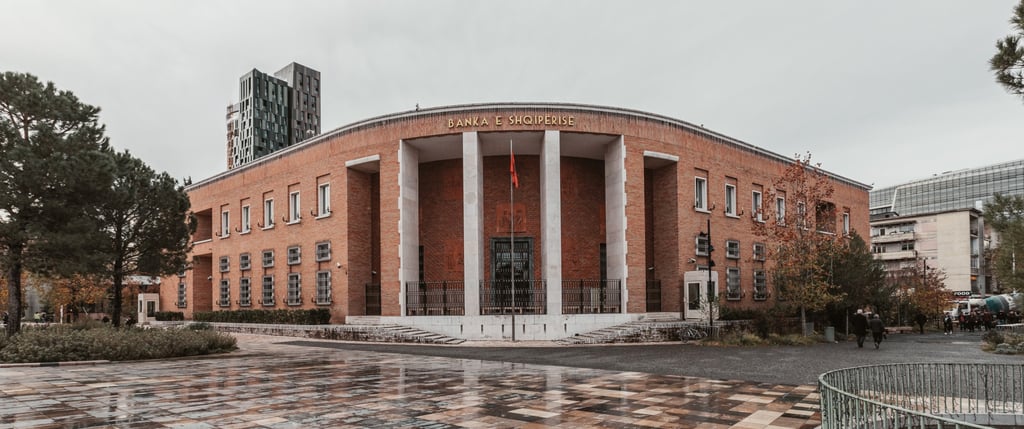
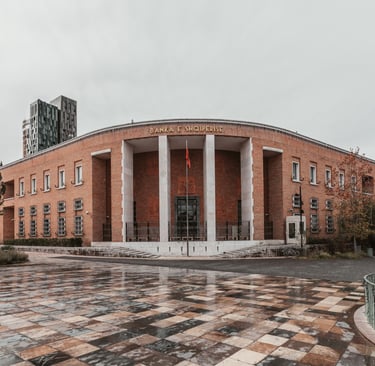
The Bank of Albania has concluded that adopting a fixed exchange rate regime (regjim kursi këmbimi fiks) would have significantly harmed the country’s macroeconomic stability. According to its internal econometric analysis, maintaining the euro at a predetermined level would have disrupted key macroeconomic parameters (parametra makroekonomikë), creating imbalances across inflation, growth, and employment indicators.
A modeled scenario examined the consequences of keeping the exchange rate fixed at 115.5 lek per euro, corresponding to the first quarter of 2023, throughout the period 2023–2025. Under these conditions, inflation would have risen sharply, reaching between 6% and 7% during 2024–2025, compared to the actual average inflation rate (norma mesatare e inflacionit) of 2.2%. This increase reflects the pressure that rigid currency policies can place on price stability (stabiliteti i çmimeve) in a small open economy.
To counteract such inflationary pressures, the Bank estimates that the base interest rate (norma bazë e interesit) would have needed to increase to approximately 7%. This tightening of monetary policy would have translated into higher borrowing costs, placing strain on both households and businesses. The resulting tightening of financial conditions (shtrëngimi i kushteve financiare) would have reduced access to credit and slowed investment activity.
The broader economic impact would have extended to growth and employment. Economic expansion would have declined to 2.6%, down from the current 3.9%, reflecting weakened aggregate demand (kërkesa agregate). At the same time, the unemployment rate would have risen by 1.2 percentage points, reaching an average of 9.7%, indicating a deterioration in labor market conditions (kushtet e tregut të punës). These shifts would have increased financial stress across both the corporate and household sectors.
The banking system would also have faced heightened risks. The ratio of non-performing loans among businesses was projected to rise from 4.6% to 7.5%, illustrating a deterioration in loan portfolio quality (cilësia e portofolit të kredive). This increase would have reflected the inability of borrowers to meet obligations under tighter financial conditions and slower economic growth, reinforcing systemic vulnerabilities.
At the same time, the Bank of Albania noted that developments during 2024–2025 created room for a more active presence in the foreign exchange market. A decline in inflation below the target, driven by external supply shocks (goditje nga oferta) in commodity and oil prices, raised concerns about excessive currency appreciation. A rapid strengthening of the lek posed potential risks to monetary stability (stabiliteti monetar) and required careful management.
In response, the central bank adopted a more active but targeted approach, intervening to moderate exchange rate movements without fixing a specific level. These actions were designed to reduce the likelihood of the currency deviating from its economic fundamentals (bazat ekonomike) and to prevent destabilizing shifts in inflation expectations (pritshmëritë inflacioniste). The interventions were therefore precautionary, addressing risks considered low in probability but high in potential cost.
The Bank of Albania emphasized that its foreign exchange operations have not aimed at maintaining a fixed rate, but rather at limiting excessive volatility. By managing the speed of currency appreciation (shpejtësia e mbiçmimit të monedhës), the institution seeks to preserve both monetary and financial stability while ensuring that expectations remain aligned with policy targets.
In its overall assessment, the Bank concluded that the existing free exchange rate regime (regjim i lirë i kursit të këmbimit) has supported stable and non-inflationary economic growth in recent years. The flexibility of the exchange rate has allowed the economy to absorb external shocks more effectively, reinforcing resilience and maintaining balanced macroeconomic performance.
Bank of Albania, part of European system programme for central banks.
Send us your suggestions to: pr@albanian-institute.com
Come visit Albania!
© Copyright 2026 Albanian Institute
Learn the official language of Albania and Kosovo in 30 days thanks to our complete Grammar, Vocabulary and Culture courses. Start speaking Albanian today!